
Used Chillers for Sale in Florida: A Buyer's Guide
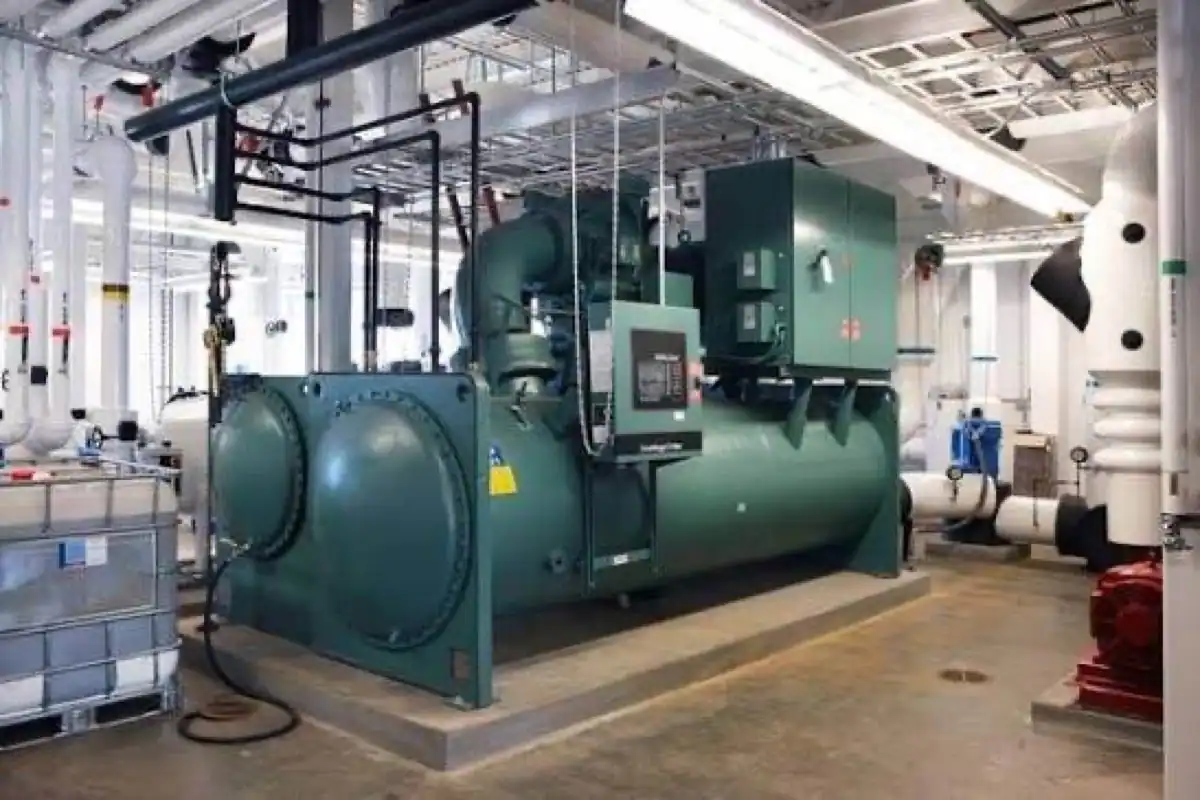
Florida is one of the best states in the country to buy a used commercial chiller, and it's not close. We rig, haul, and resell this gear for a living, and the volume of good equipment moving through the state — from plant decommissioning, hotel retrofits, and data-center upgrades — keeps a steady supply of 150-ton to 1,500-ton units on the secondary market year-round. If you're cooling a warehouse in Lakeland, a hotel in Miami, or a process line in Jacksonville, a used chiller can cut your capital cost by 40 to 70 percent versus new.
This is the guide we wish more buyers read before they wired money. It covers why Florida supply is strong, what units actually cost by tonnage, where the good ones come from, and how to buy without inheriting somebody else's headache.
Why Florida has a deep used-chiller market
Florida runs its cooling equipment hard. That's the whole story in one sentence.
- Latent load is brutal here. High humidity means chillers and air handlers work year-round instead of seasonally, so facilities upgrade and replace on a faster cycle than they would in a dry climate. Faster replacement means more good used units hitting the market.
- Constant construction and retrofit churn. Orlando, Tampa, Miami, and Fort Lauderdale are in a permanent build-and-renovate loop. Hotels re-tool their central plants, hospitals expand, and old office towers get gut-renovated — every one of those projects pulls out serviceable equipment.
- Plant decommissioning. When a manufacturing or processing facility shuts down, its chiller plant comes out whole. Those are often the best buys on the market — units that ran on a maintenance contract right up until the day the lights went off. That's exactly the kind of equipment we pull during a plant cleanup.
- Coastal corrosion culls the weak. Salt air near the coast is hard on condenser coils and cabinets. It also means the survivors that were maintained properly stand out, and buyers who know what to inspect can find real value while others overpay for corroded junk.
What used chillers actually cost in Florida
Prices move with tonnage, refrigerant, condition, and brand, but here are the honest working ranges we see. For a full breakdown, see our used chiller price guide.
- Small packaged units (under 100 tons): roughly 8,000 to 30,000 dollars. These compete with cheap new equipment, so the discount isn't always huge.
- Mid-size (150 to 500 tons): roughly 25,000 to 90,000 dollars depending on age and refrigerant. This is the sweet spot of the resale market — best selection, best value.
- Large (600 to 1,500 tons): roughly 75,000 to 250,000 dollars. Centrifugal units dominate this band. A well-maintained York or Trane centrifugal here can be 50 percent of new-equipment cost.
Refrigerant matters more than most buyers think. Modern refrigerants — R-134a, R-1234ze, R-513A — hold value and keep you clear of phase-down headaches. Older R-22 and R-123 units are cheaper to buy but harder to service long-term. We break the whole topic down in used chiller refrigerants explained.
Where the good units come from
Not all used chillers are equal, and the source tells you most of what you need to know.
- Decommissioned plants are the gold standard. The unit ran until shutdown, has service records, and came out under controlled conditions.
- Hotel and hospital retrofits produce strong central-plant units, often centrifugal, replaced because of an efficiency upgrade rather than a failure.
- Data-center upgrades put low-hour, precision-maintained chillers on the market — these run in tightly controlled environments and are usually excellent buys.
- Auction and scrap-yard pulls are the riskiest. Cheap up front, but you're often buying blind with no run history and no rigging documentation.
We buy across all of these channels, which is why we can match a buyer to the right unit instead of pushing whatever happens to be on the floor. See what's moving through our chiller inventory and buy program.
How to buy a used chiller without getting burned
The single most common mistake is buying on a photo and a phone call. Don't. Run the same short checklist we do:
- Get the nameplate data. Model, serial, tonnage, refrigerant, voltage, and full-load amps. No nameplate photo, no deal. Our full used chiller buying checklist walks through the rest.
- Demand run history. A unit operational within the last 12 months on a maintenance contract is worth far more than one that sat idle for three years.
- Inspect the right things. Tube bundles, compressor oil analysis, controls, and coil condition tell you more than a shiny cabinet. See what to inspect before buying a used chiller.
- Confirm it was tested, not just "ran when pulled." There's a big difference. A properly tested and megged unit is a known quantity.
- Size it right. Oversizing a chiller in Florida's high-latent climate causes short-cycling and humidity problems. Match the load — here's how to size a used chiller.
Delivery, rigging, and Florida-specific costs
Buying the unit is half the job — getting it in place is the other half. A 500-ton chiller can weigh 15,000 to 25,000 pounds and needs crane or heavy-rigging access. Budget separately for delivery and rigging, and remember that a rooftop install in downtown Miami with street-permit requirements costs a lot more than a slab drop at a Polk County warehouse.
Two more Florida realities to plan around:
- Sales tax. Florida charges sales tax on equipment purchases; factor it into your total. Some manufacturing-use purchases qualify for exemptions, so check with your accountant before you assume.
- Hurricane season. If you're buying between June and November, plan storage and staging so a named storm doesn't leave a six-figure chiller sitting exposed in a yard.
Bottom line
Florida's climate and constant construction churn make it one of the deepest used-chiller markets in the country — which is good news for buyers who know what to look for. Focus on the 150-to-1,500-ton band, favor modern refrigerants, demand run history and a real inspection, and size the unit to your actual latent load. Do that and you'll cut your cooling capital cost dramatically without buying somebody else's problem.
We both buy and resell used chillers across the state, so we can source the right unit for your building or pay cash for one you're taking out. Tell us your tonnage and location and we'll get you a straight answer or a cash offer — no broker games. Or just reach out here and we'll point you at the right unit.
Looking for used equipment?
We move chillers, boilers, generators, and cooling towers across Florida and nationwide. Tell us what you need.
Ask About Available UnitsMore in Buying Guides
Buying Used Machine Tools From a Plant Closure
Machine tools from a closing facility can be the best value in industrial equipment, provided you evaluate wear, controls and what it takes to move.
Inspecting a Used Industrial Boiler Before You Buy
Pressure vessel condition, jurisdiction paperwork and burner package all decide whether a used boiler is a bargain or an ornament.
Load Testing a Used Generator Before You Buy
Hours mean little without a load test. What to test, what to look for, and what a generator's history tells you.